Preserved evidence before cleanup
Suspicious LaunchDaemon files, hidden scripts, binary paths, code-signing output, hashes, and strings were documented before destructive cleanup actions were taken.
Selected project
A rushed developer-tool install turned into a defensive investigation of fake Apple-looking LaunchDaemons, hidden payload paths, root-owned processes, ad-hoc signed Mach-O binaries, and possible stealer or clipboard-hijacker indicators.
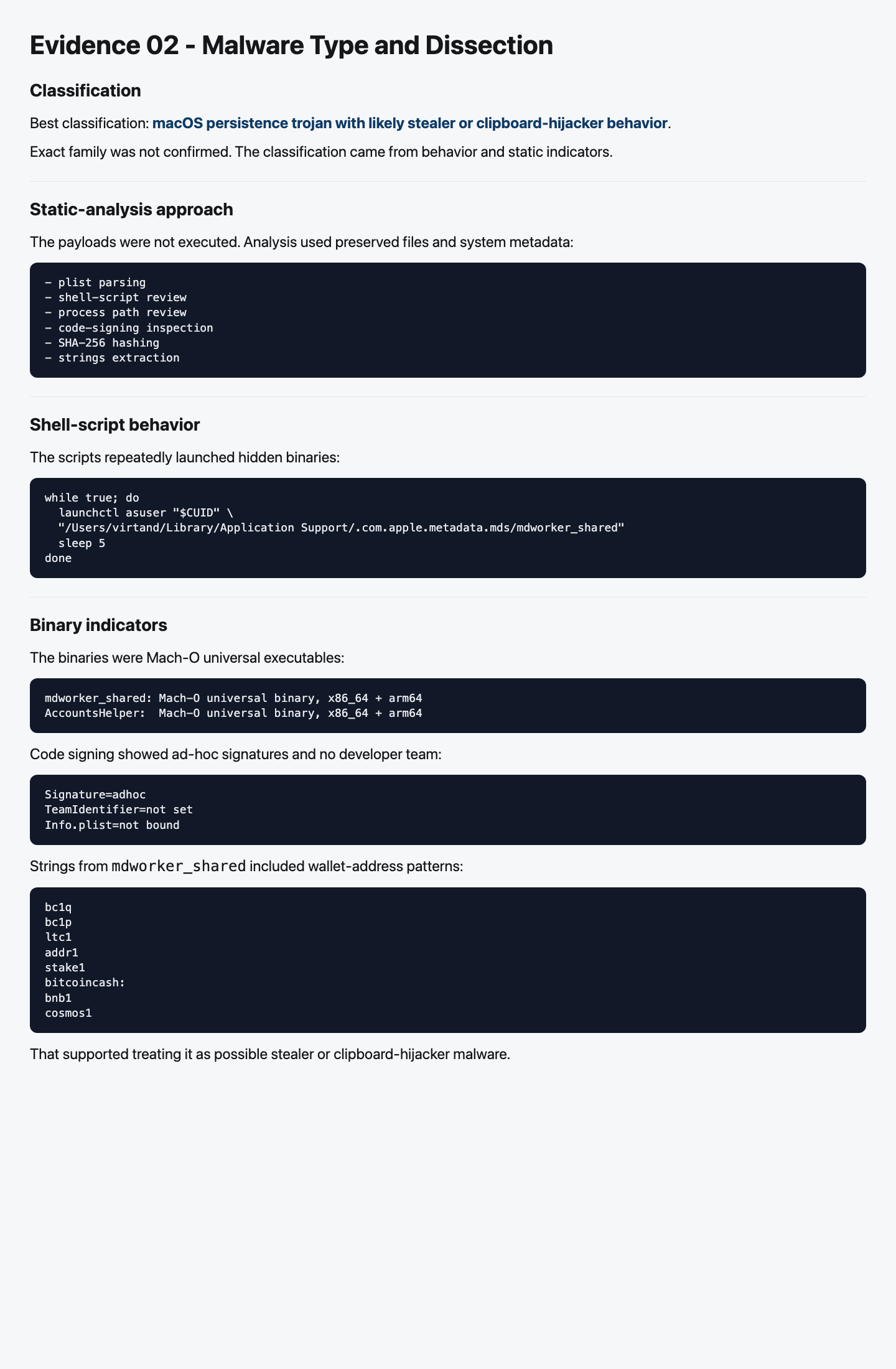
Suspicious LaunchDaemon files, hidden scripts, binary paths, code-signing output, hashes, and strings were documented before destructive cleanup actions were taken.
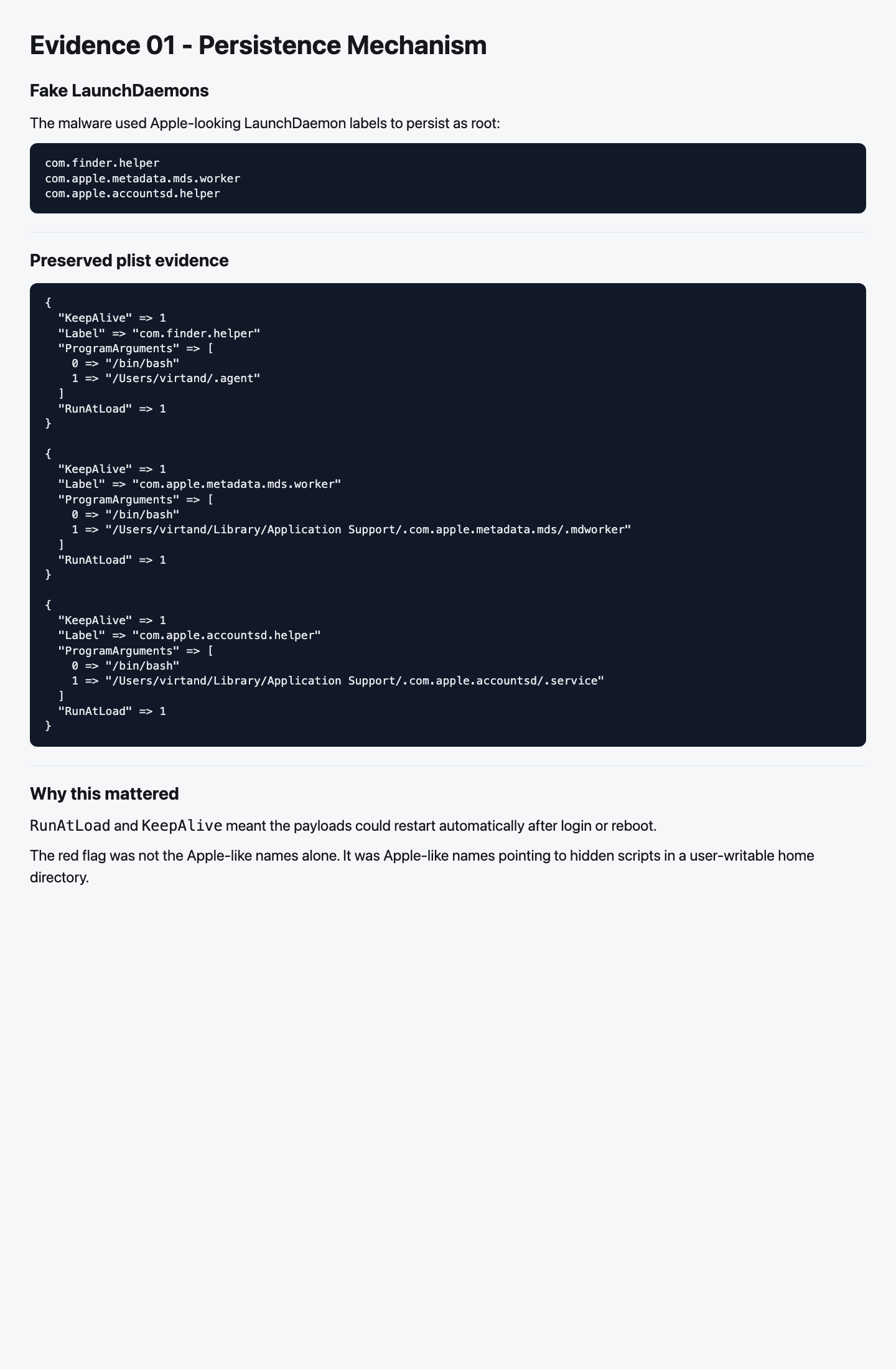
The strongest signal was not the Apple-like labels alone. It was those labels pointing to hidden payloads inside user-writable home-directory locations.
The payloads were not executed again. The investigation used plist parsing, shell-script review, process-path inspection, code-signing metadata, SHA-256 hashing, and strings extraction.
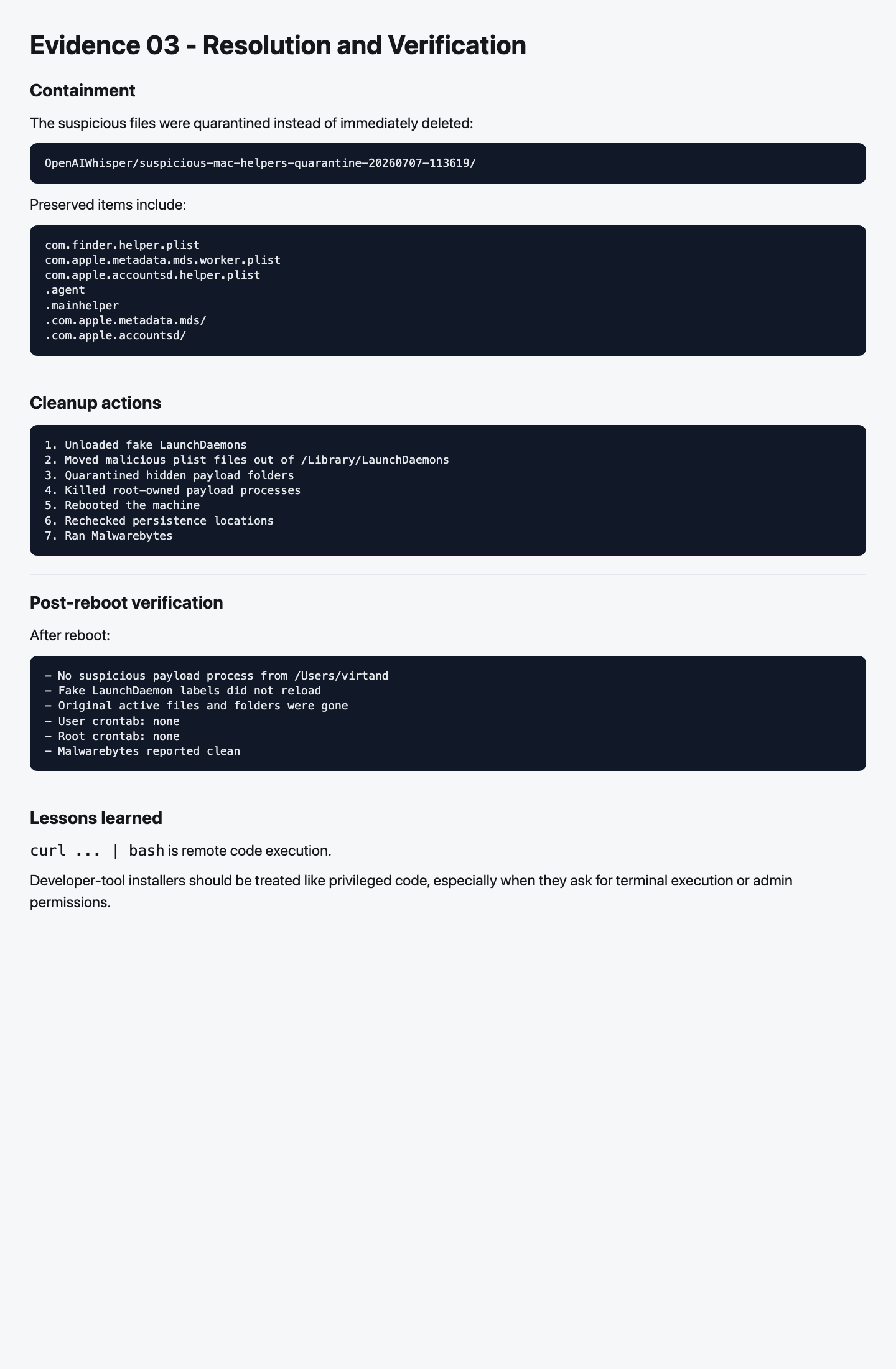
After quarantine, unloading, cleanup, process termination, and reboot, the fake LaunchDaemon labels did not reload and no root-owned payload process remained under the home directory.
Incident evidence
The evidence report shows the investigation path: persistence mechanism, malware classification, static dissection, containment, cleanup, and post-reboot verification. It is presented as a defensive security workflow, not as malware execution guidance.
Evidence report
The report keeps the incident narrative tied to concrete artifacts: fake LaunchDaemon labels, hidden payload locations, static-analysis signals, containment sequence, and post-cleanup verification. The public page summarizes the workflow; the DOCX preserves the evidence-led writeup.
Download DOCX evidence reportResponse workflow